Molecular measurement of free testosterone and free cortisol, from saliva.
Wearables see the load. Summa shows the response.
Free testosterone and free cortisol from saliva, read on each athlete’s own scale. Sampled at home in about two minutes, analysed in our own laboratory in Oulu.
Load is easy to measure. Response is harder.
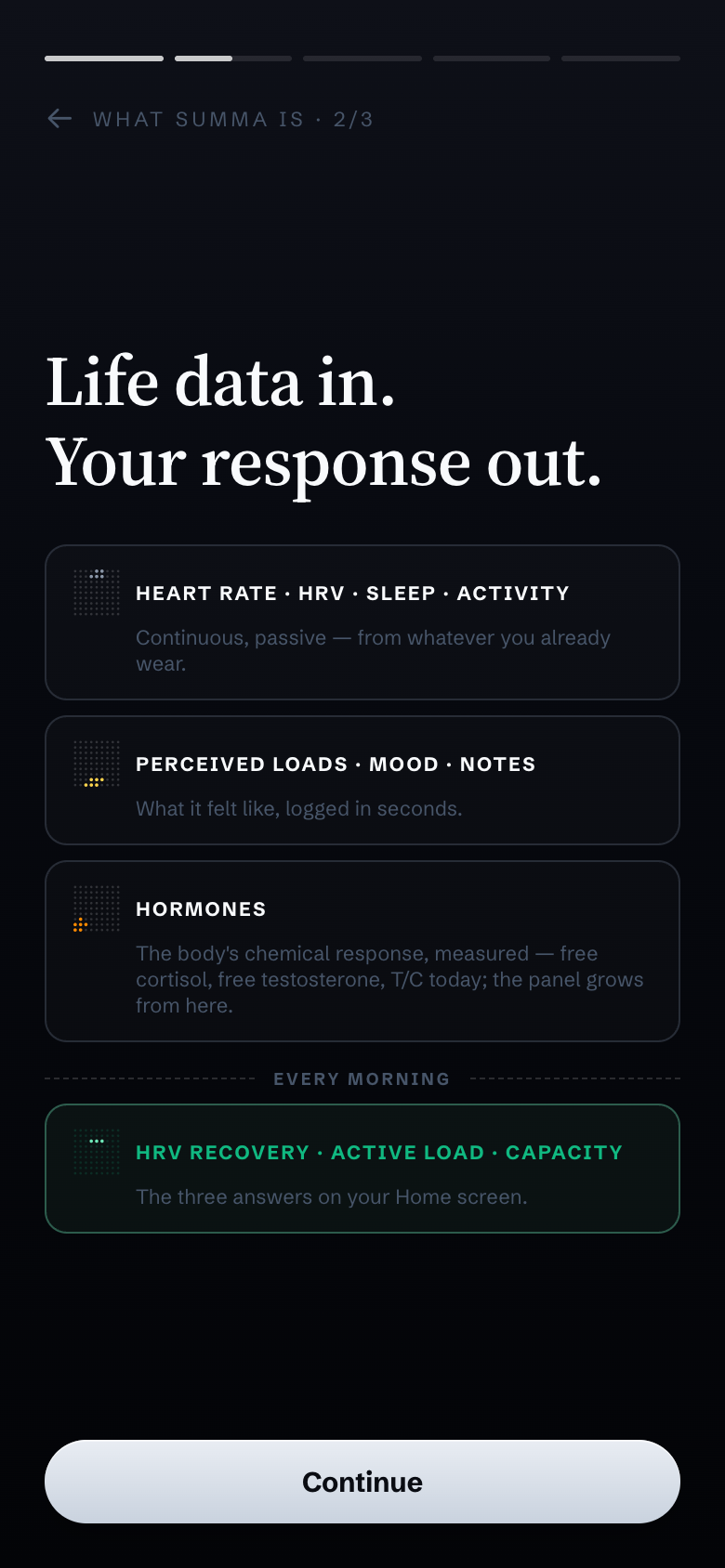
GPS distance, power output and heart rate describe what an athlete did. Two players can finish the same session in very different states. Summa adds the response: free testosterone and free cortisol, read against each athlete’s own range.
- External load: distance, power, sprints
- Heart rate and HRV
- Strain trends over weeks
- How this athlete absorbed the session
- Whether recovery cleared before the next one
- How much life outside training adds on top: travel, work, sleep
The building-up signal.
It tracks recovery and readiness.
The breaking-down signal.
It tracks stress and load — a partner in adaptation, read on the athlete’s own daily rhythm.
The balance between the two.
Read on each athlete’s own scale, never against a population cutoff.
Everything in one place.
The Summa app gathers the whole picture of each athlete on one timeline: what they answer, what they feel, what their wearable records and what their hormones show. The Team Platform reads the same picture across the squad.
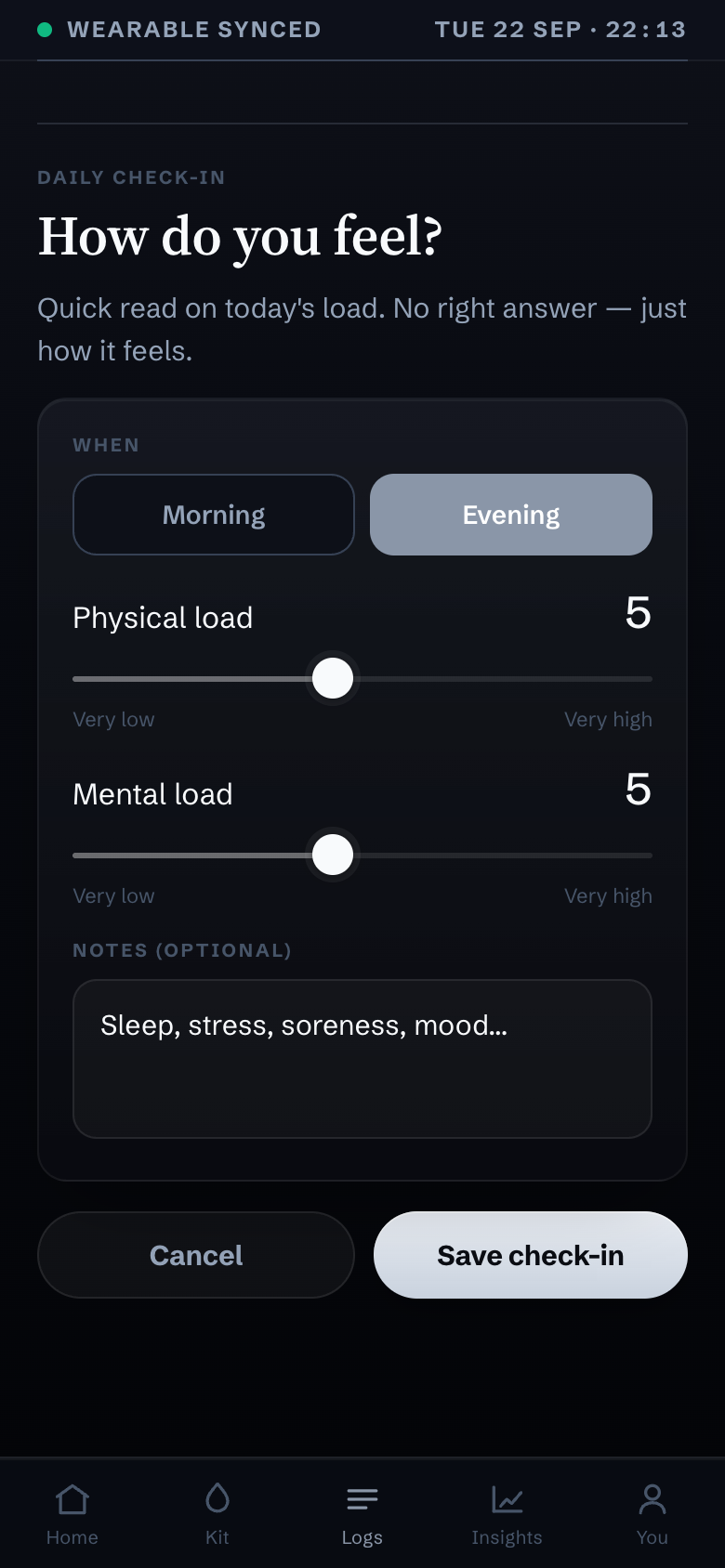
Short check-ins, answered in seconds.
Physical and mental, as the athlete felt it.
In the athlete’s own words.
HRV, sleep, heart rate and workouts, through Apple Health or Health Connect.
Free testosterone, free cortisol and T/C from every Lab Kit sample.
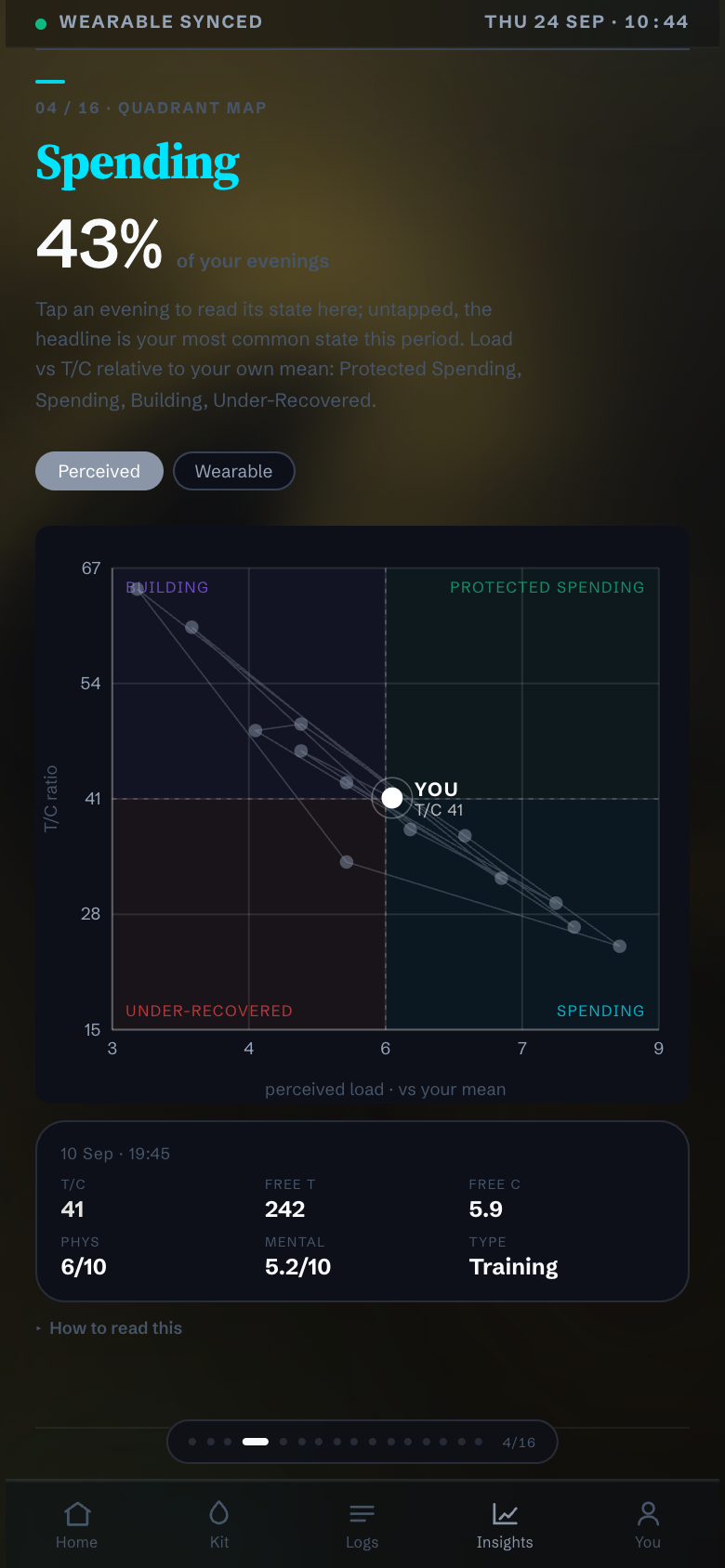
Read together, against each athlete’s own baseline: their state, their normal, how they respond and what is shifting.
From the tube to the answer, in one kit.
The Lab Kit is the whole measurement, not only the tubes: the sampling set, the laboratory analysis of every sample, and your results in the Summa app. It is the layer your wearable cannot see.
The sampling set
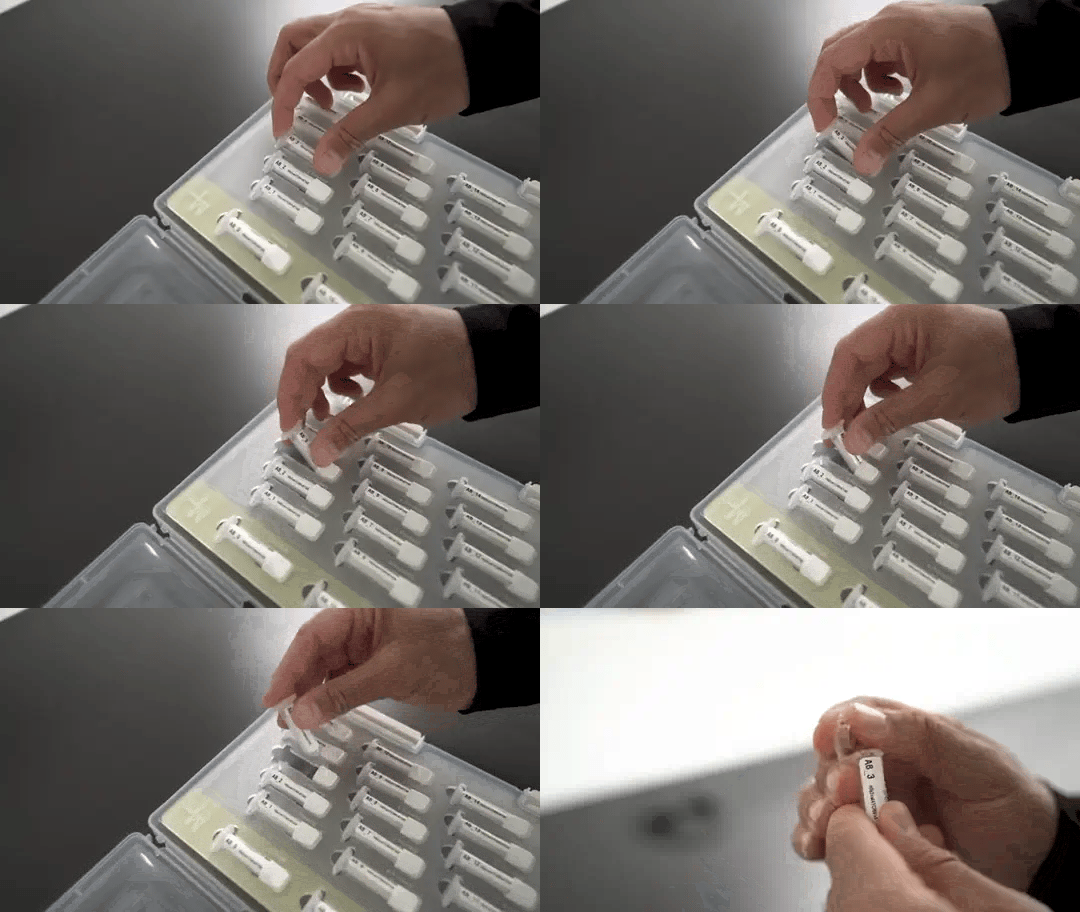
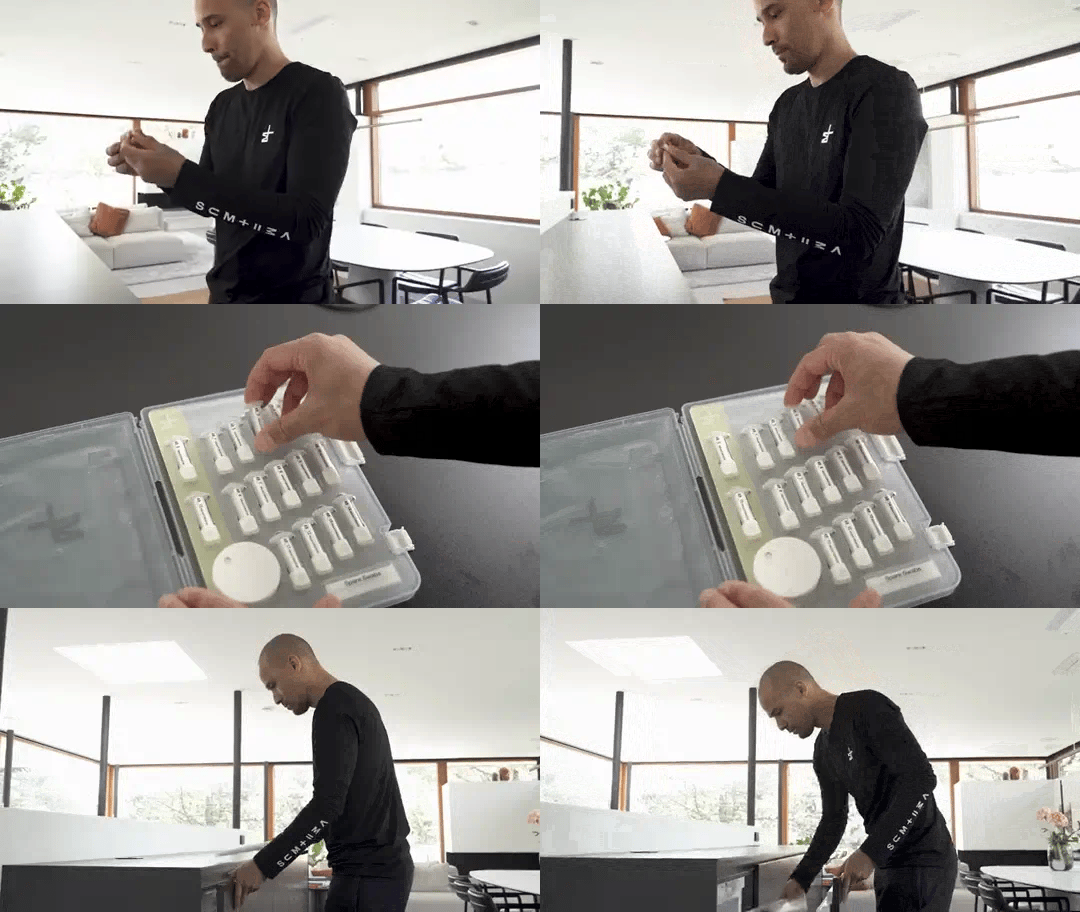
Numbered, capped tubes with the swab already inside, and a holder that keeps your collected samples in order in the freezer.
The laboratory analysis
Every sample is analysed in our own laboratory for free testosterone, free cortisol and the T/C ratio between them.
The Summa app
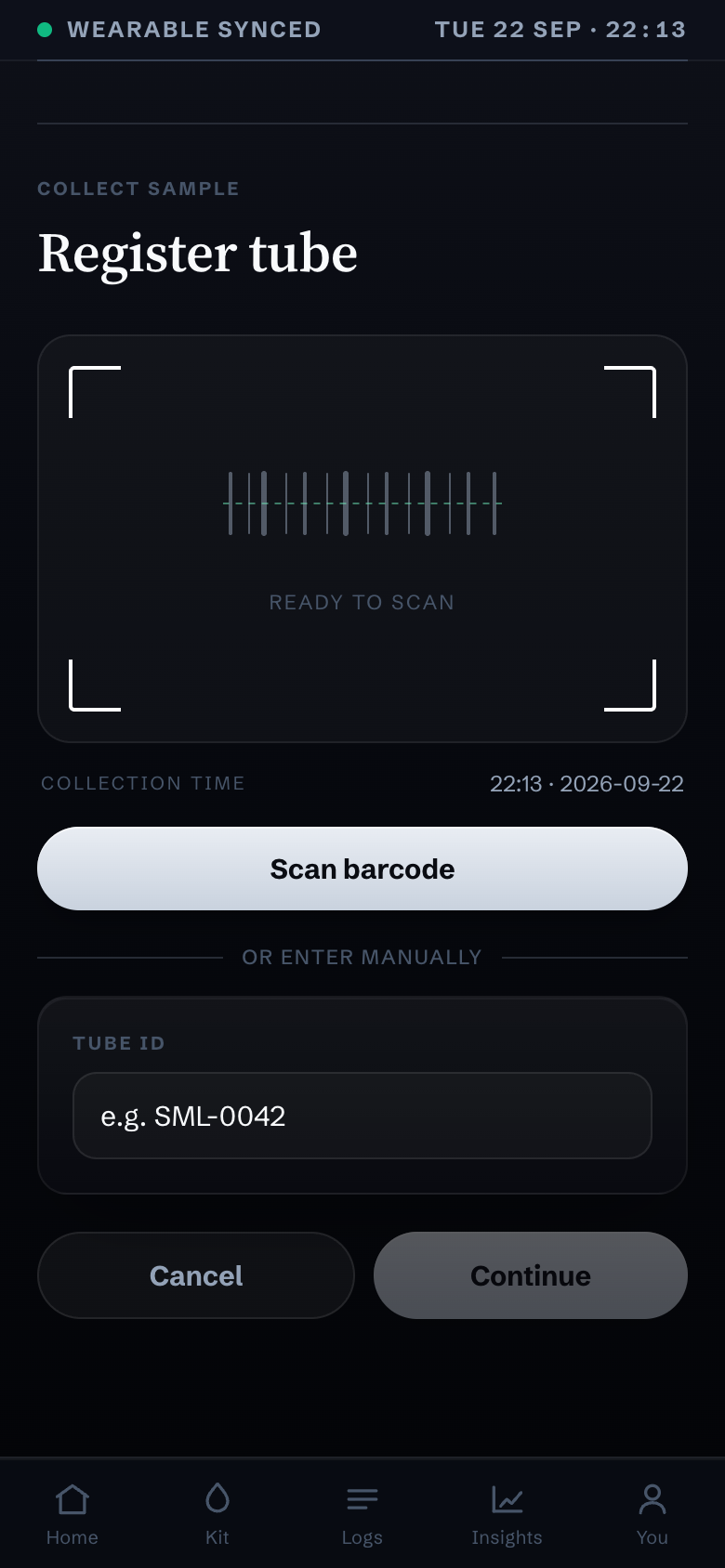
Scan the tube, log the context in seconds, and read each result against your own baseline — next to the sleep, HRV and load from the wearable you already use.
Your baseline
It starts with fourteen samples in one week. They map your personal range: the scale every later sample is read against.
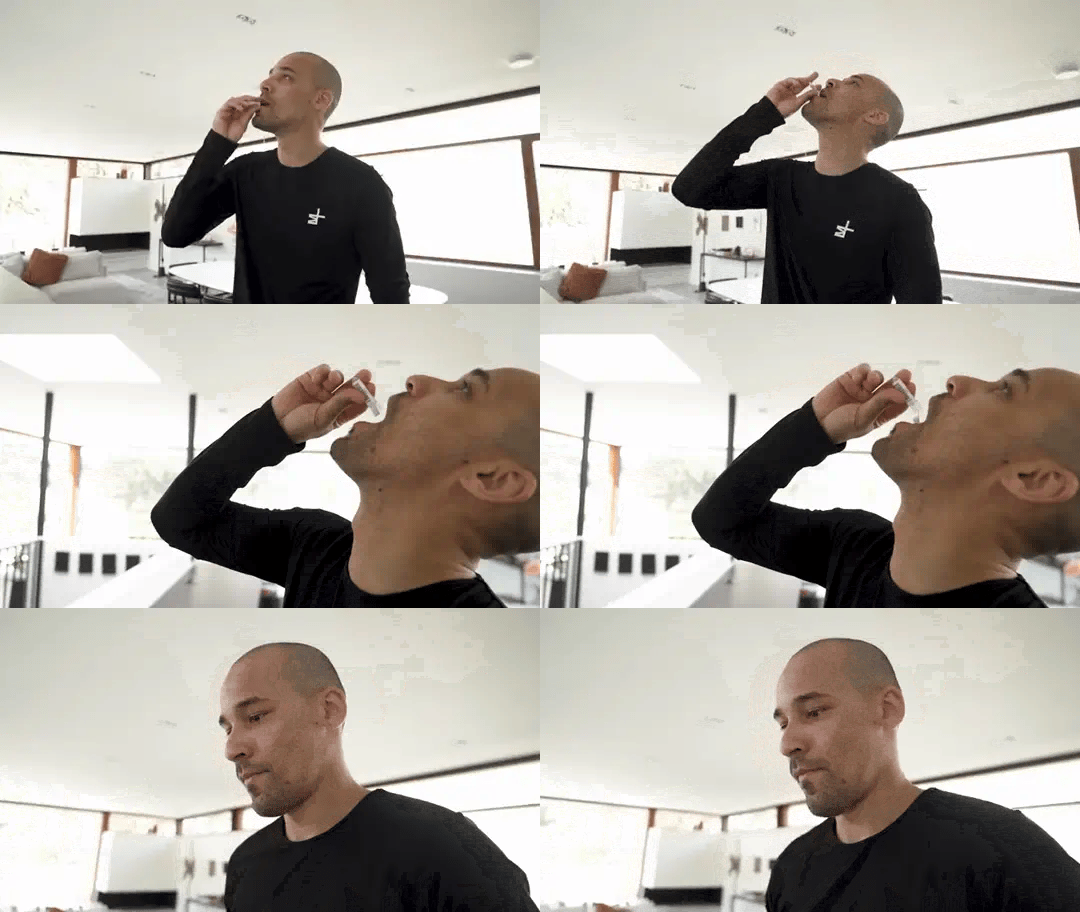
A drop of saliva, taken where life happens.
A couple of minutes per test, at home: the swab goes from its tube to your mouth and back, the app stamps the exact moment, and the freezer keeps the sample until ship day. Repeat — and start to understand the cause and effect.


The response to training — read in season, not in a clinic.
Decision-support across a roster: prevention and return-to-play.
Field studies with lab-grade Wet Data and clean provenance.
Readiness under real load — mission-critical Biointelligence.
Work is load too — the same biology keeps the account.
Your own baseline, measured — and every later sample read against it.
The response to your load.
The load, the environment, the experience around each moment — from the wearable and from you.
Response, state and trajectory — read against your own baseline, never population norms.
Across all four: the team view — the same questions, asked of a whole group.
Every sample carries its context: the moment, the load, the feeling.
Your results, on your own scale.
Every result lands in the app, read against your baseline and the days your wearable already recorded: your state, your own normal, how you respond and what is shifting.


How free testosterone and free cortisol hormones behave.
A single test is a snapshot — the value is in the movement. Free testosterone and free cortisol respond fast to training, stress and sleep; read against your own baseline, the day becomes readable. This is the layer no wearable can see.
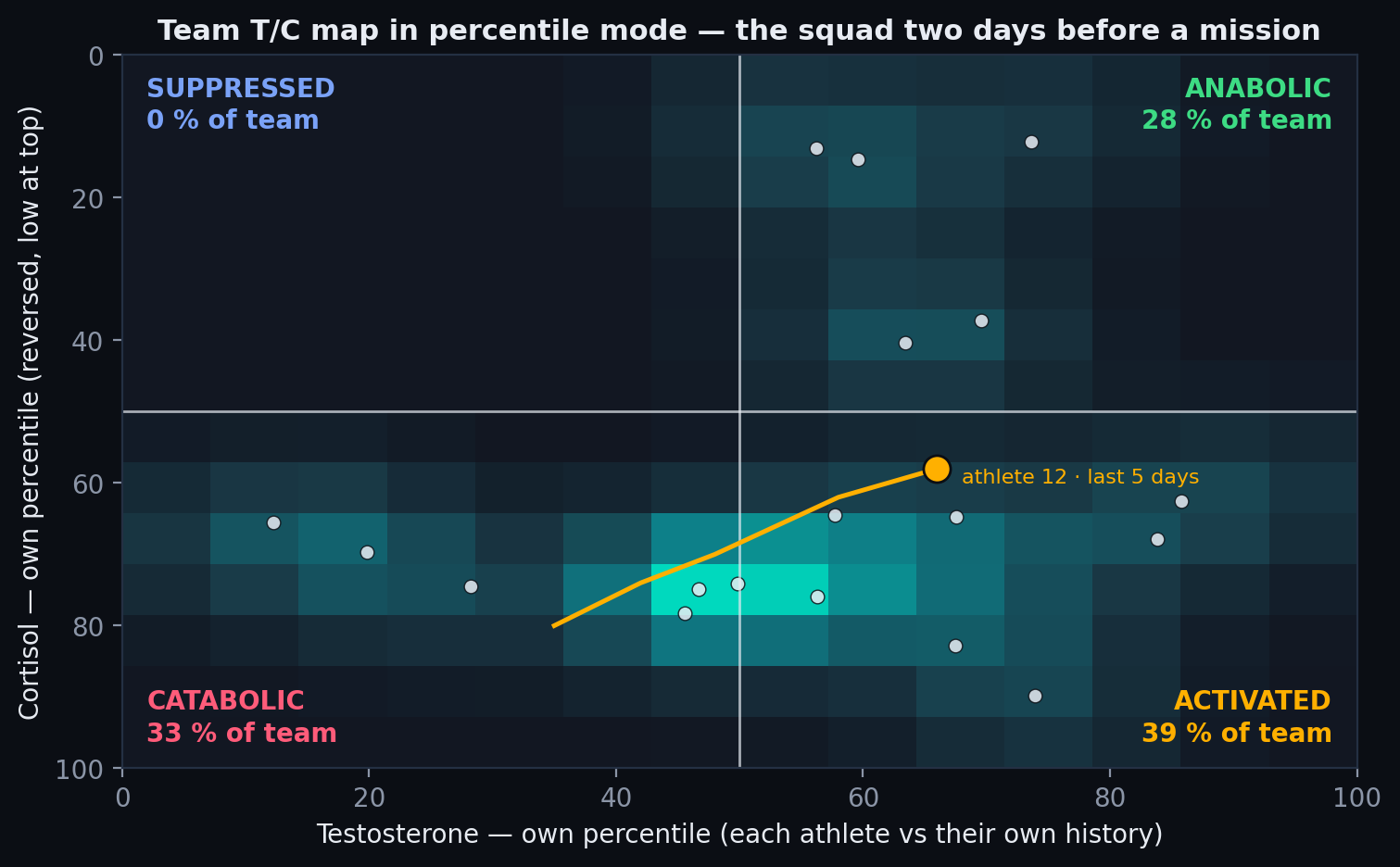
The whole team, on one map.
Every athlete is read against their own history first — own-percentile mode — so the differences between people drop away and only the state remains. Then the whole squad appears at once. Is the squad ready, or being worn down?

Baseline together
Every athlete runs the 14-tube baseline in one week — ideally in pre-season, so the season starts on each athlete’s own scale.

Pick the season rhythm
Two a week keeps a continuous stress-and-recovery line; the event lead-up adds resolution when it matters.

Read the squad
The team map shows who is ready, mobilised or strained; the roster shows who has shifted — and who is thriving.

T high · C low. Recovered and primed.
T high · C high. Mobilised — a hard day or competition arousal.
T low · C high. Strained and under-recovered.
T low · C low. Genuine rest, or depletion — context decides.
Who has shifted, and who is thriving.
One row per athlete, sorted by a composite score. Every number is against that athlete’s own history: percentiles, streaks of several days, the seven-day trend, and whether they have been sampling at all.
| Athlete | T · own pct | C · own pct | T/C · own pct | Composite | Streak | Trend 7d | Adherence 7d | Flags |
|---|---|---|---|---|---|---|---|---|
| A-12 | P18 | P93 | P8 | −2.4 | 5 ↓ days | −11% | 71% | Low T · high C · 5-day streak |
| A-05 | P22 | P81 | P15 | −2.0 | 4 ↓ days | −8% | 100% | Low T/C · 4-day streak |
| A-16 | P38 | P66 | P33 | −1.1 | 2 ↓ days | −3% | 86% | |
| A-07 | P44 | P71 | P30 | −0.9 | 2 ↓ days | −4% | 100% | |
| A-03 | P50 | P55 | P47 | −0.2 | — | −1% | 43% | Adherence 43% |
| A-02 | P52 | P49 | P50 | +0.1 | — | 0% | 93% | |
| A-11 | P63 | P40 | P58 | +0.6 | — | +1% | 86% | |
| A-15 | P79 | P30 | P84 | +1.6 | 3 ↑ days | +4% | 100% | |
| A-04 | P88 | P12 | P91 | +2.1 | 4 ↑ days | +6% | 100% | Quietly excelling |
| A-09 | — | — | — | — | — | — | 14% | No sample for 16 days |
The individual is the reference
Every flag, percentile and score starts from the athlete’s own history.
Noise is stated, not hidden
Comparisons say whether a difference clears the noise; flags need several days.
Anchors come from the schedule
Light and heavy days come from load or the calendar, never from the hormones.
Tested on real cohorts
An elite-sport study and a tactical unit through an intensive training course.
One measurement, every question answered.
A team decision involves more than the coach. Here is what each person asks first, and what the Lab Kit gives them.
Does this fit a morning with the whole roster?
About two minutes per sample, taken at home or at the facility. The app stamps the time and the context; the tube goes in the freezer. No needles, no clinic visit.
What does it give us that we don’t have?
Each athlete’s response to load, on their own scale, and the whole squad on one map. Load decisions rest on measured biology, alongside the data you already collect.
What exactly is measured, and how?
Free testosterone and free cortisol — the unbound fraction — analysed in our own laboratory in Oulu, more than 20,000 samples to date. Every reading is self-relative. Decision-support, not diagnosis.
Where does the data live, and can we get it out?
Each record belongs to the athlete, and the data can be exported at any time.
What’s in it for me?
Their own baseline and every result in the Summa app: their state, their normal, how they respond and what is shifting.
Start with ten athletes.
A team pilot runs the Lab Kit with ten of your athletes through a real stretch of your season. The success criteria are agreed with your performance and medical leads before kickoff, and the pilot fee is credited toward your first year.
Onboarding
Staff set up, athletes in the app, consent signed, data sync tested.
Baseline
Fourteen samples per athlete in one week, mornings and evenings. Each athlete’s own range.
In season
Samples keyed to the training calendar: heavy days, light days and the morning after — a data point for the readiness conversation, alongside coach and medical judgment.
Readout
Results against the criteria agreed at kickoff, presented to your staff.
Apply for a team pilot.
Pilot spots are limited. Tell us about your team and our sales team replies to plan the pilot with you.
The suggested protocols.
Your wearable measures what the body did. A saliva sample measures what the body concluded — including what no sensor saw. A protocol simply tells you when to sample so the two can be compared. Everyone starts with the Baseline; after it, find the situation that sounds like you — or sample entirely freely.
“Am I recovering from training — or is it piling up?”
One evening sample a week, always on the same day. When a block gets heavy, add the heavy-day / light-day pair and the morning after the hardest session.
“What does game day take out of me — and am I ready for the next one?”
Samples keyed to the event, not the calendar: the evenings around your heaviest day, game day and your lightest day — denser in the lead-up to a big one.
“Is irregular sleep bending my daily rhythm?”
A morning and an evening sample on the same day. The morning starts high, the evening lands low — the slope between them is the rhythm. Watched over weeks, it shows what a road trip, a time-zone jump or a packed away schedule is doing to it.
“Does my system settle back to normal after the hard days?”
Evening samples in the days after a hard stretch, read against your baseline. The question is never the peak — it is the return.
Every evening plus a weekly morning, for two weeks. It maps your personal range — the scale every later sample is read against. In practice: teams run it together in pre-season, so the season starts with every athlete on their own scale.
One evening sample each day for a week. It shows what the week actually does — which days load you, which restore you — and finds your true heaviest and lightest days. In practice: the first week of a new block, or whenever the weekly rhythm is uncertain.
Sustained longitudinal monitoring. The heaviest evening shows what peak load takes out; the lightest shows whether you came back. Light enough to keep up all season. In practice: the default season rhythm — a continuous stress-and-recovery line for a whole roster, at two tubes a week.
Focused event monitoring: the three evenings before the event and the morning of it — the lead-up in high resolution. In practice: game week, race week, fight camp — the days when the question is who is ready.
Three samples a day — at waking, thirty minutes later and in the evening — across three consecutive days. One snapshot carries the whole shape of your rhythm: the morning response, the daily slope, the total. In practice: a once-or-twice-a-year status check, or the deep look when the trend line raises a question.
The full library — all 13 validated sampling designs
In the water with Ryan Murphy.
Olympic champion Ryan Murphy measures what training does to his hormones.
“I’ve been using Summa to understand how my hormones react.”
Former world-record holder — 100 m backstroke.
Analysed in our own laboratory, in Oulu.
Every Lab Kit sample is analysed by Summa, in the laboratory we built and run ourselves.
- Headquarters. Summa Labs is built and led from here.
- Our own laboratory. More than 20,000 samples have been analysed here to date.
- Your samples travel frozen to Oulu and are analysed here.
Measured at scale.
"We started in elite sport, demanding professions and defence — environments where the same decision is made every day: push harder, or recover. Wearables measure indirect signals. Biochemistry adds the direct molecular layer."
Questions, answered.
What is in the Lab Kit?
Numbered, capped tubes with the swab already inside, a holder that keeps your collected samples in order in the freezer, and the instructions. The laboratory analysis of every sample and your results in the Summa app are part of the kit. The Lab Kit is the whole measurement, not only the tubes.
What does Summa actually measure?
Summa measures free testosterone and free cortisol from a saliva sample, together with the T/C ratio between them. This is Wet Data, the body's chemical response to everything the day contained. Every result is read against your own baseline range. It lands in the app on the same timeline as your Context Data: heart rate, HRV, sleep, activity and the load you logged.
Why saliva, and why free hormones?
Most of the hormone in your blood is bound to carrier proteins and inactive. The free fraction is the part that is biologically available and actually acting on your body. Saliva carries that free fraction, and that is exactly why we measure it: a saliva test reads the active signal rather than the total store. A drop of saliva also needs no needle and no clinic. The sample is taken where life happens, at home, in season, before and after training, without interrupting the state you are trying to measure.
How do I get started?
For a team, apply for a team pilot: ten of your athletes, fifteen weeks, with the success criteria agreed before kickoff. For anything else, send a message to our sales team. Tell us whether you are a team or an individual and what you want to measure, and we set up the package with you.
How does a team pilot work?
Ten of your athletes use the Lab Kit for fifteen weeks: one week of onboarding, a baseline week, in-season sampling keyed to your training calendar, and a readout. The success criteria are agreed with your performance and medical leads before kickoff, and the pilot fee is credited toward your first year. Apply in the team pilot section and our sales team plans it with you.
Can I use Summa as an individual?
Yes. You start with your own Baseline Kit: fourteen samples in one week. After it you add Lab Kits whenever you want to keep sampling. If your team already runs Summa, your baseline is included in your athlete licence, and you can still add Lab Kits personally on top of the team’s.
What do I need at home?
A normal home freezer and your phone. Each sample goes into the freezer right after collection and stays frozen until ship day.
Do I need a wearable?
No. Saliva alone builds your baseline, and every protocol works without a wearable. With one, whether a watch, a ring or a strap feeding your phone's health platform, Summa also reads your Context Data. HRV Recovery and Active Load then appear from day one, and every hormone result is read against the load that caused it. Summa works without a wearable and is sharper with one.
How often do I sample, and what if I miss days?
It starts with the baseline: fourteen samples in one week, seven mornings and seven evenings, that map your individual range. From there, sampling is yours. You can follow a suggested protocol of one to seven samples a week, or sample freely on your own rhythm. A missed day breaks nothing. Sampling that follows a protocol comes back analysed, and everything else comes back as raw values against your baseline. Nothing is wasted. The app carries the calendar and the reminders do the remembering.
How do I get results?
Each tube is scanned with the app at the moment of collection, so the exact time is stamped for you. The tube then waits in your home freezer, and your collected tubes travel together, frozen, to our laboratory in Oulu, Finland. After the analysis, the results land straight in the Summa app. The hormone layer opens on top of the same days your Context Data already recorded, and your baseline puts every number in context.
Who sees my data?
You do. The account belongs to the person. Your baseline, history and results follow you through clubs, teams and studies, not the other way around. The team view shows staff only the subjects who have consented, and consent is per person. No one sees your results without it.
Who owns the account — the team or the athlete?
The athlete. Every account is a personal, persistent record — not the team's. It follows the athlete between clubs, employers and studies, for as long as they keep sampling, and the data can be exported at any time.
What happens to my account if I change teams?
Nothing is lost: the baseline, the history and the results move with you. Between teams, continuity is optional. No active licence is needed to keep a history alive: a small continuity fee keeps your account live and ready, in case you join another roster later. If you'd rather not pay it, your history is still kept, just not active for new sampling until a team or you personally pick it back up.
Is this a medical test?
No. Summa is for research and wellness use only, not for medical or diagnostic purposes. It never diagnoses or treats. Questions about your health belong with a health professional. What Summa gives you is an accurate, longitudinal picture of what life does to you.
The Truth In You.
For a team, start with a pilot. For anything else, send us a message: who you are and what you want to measure.
Or write to info@summa.bio